DE
In Griechenland (um 160 v. Chr.) nahm man an, die Klitoris sei eine umgekehrte Form des Penis. Frauen galten deshalb als „misslungene“ Körper – als „Männer mit beschädigtem Körper“.
1486 wurden Regeln formuliert, um Frauen zu töten, die als „Hexen“ galten. Jede Frau, die die damalige Ordnung und damit das Patriarchat in den Augen der Gesellschaft zu sehr störte, konnte als „Hexe“ verurteilt werden. Als Höchststrafe drohte der Tod; daneben Folter und Demütigungen verschiedenster Art – je nachdem, wie „hexenhaft“ man sie einstufte.
Um zu „prüfen“, wie „hexenhaft“ eine Frau sei, sollten Männer ihre Klitoris reiben; wenn sie dabei anschwoll, galt sie als „Nippel des Teufels“.

Man wollte Frauen von ihrer Aufmüpfigkeit „heilen“, indem man ihnen die Klitoris abschnitt: Sie galt als Quelle weiblicher Lust und damit als etwas Dämonisches – als Krankheit, ähnlich der sogenannten „Hysterie“.
Zugleich behauptete man, der klitorale Orgasmus sei „unreif“ und kindisch, obwohl rund 80 % der Frauen eine Stimulation der Klitoris benötigen, um zum Orgasmus zu kommen.
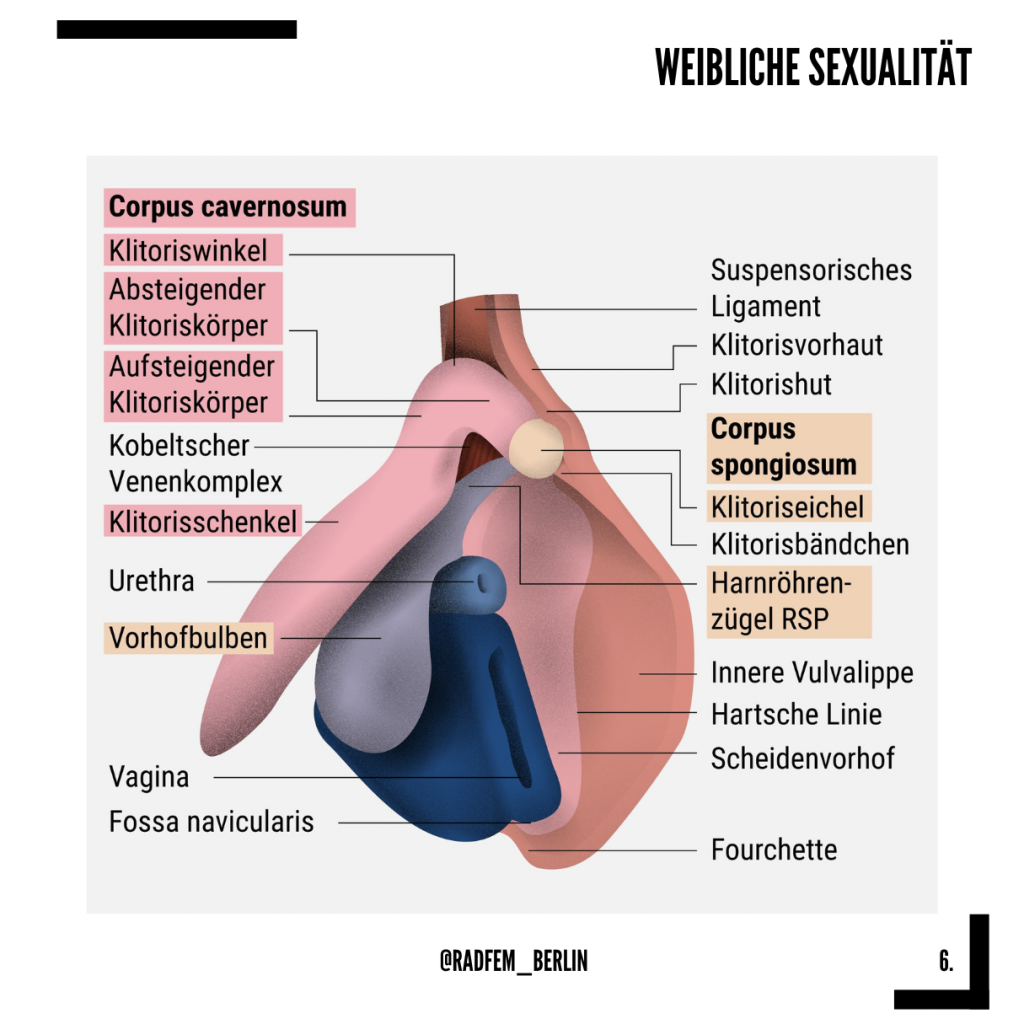
Die Klitoris wurde aus wissenschaftlichen Lehrbüchern weitgehend verdrängt; ihre vollständige Anatomie war bis 1998 kaum bekannt.
Die Klitoris steht für weibliche sexuelle Lust – ein Empfinden, das Frauen nicht zugestanden wurde. Etwas, wofür Frauen auch heute noch bestraft werden.
ENG
In Greece (around 160 BCE), people believed that the clitoris was an inverted form of the penis. Women were therefore considered “failed” bodies—“men with damaged bodies.”
In 1486, rules were then laid down to kill women who were deemed “witches.” Any woman who, in the eyes of society, disrupted the established order—and thus the patriarchy—too much could be condemned as a “witch.” The maximum penalty was death; otherwise, torture and humiliation of every kind, depending on how “witch-like” she was judged to be.
To “test” how “witch-like” a woman was, men were required to rub her clitoris; if it swelled, it was considered a “devil’s nipple.” They wanted to “cure” women of their defiance by cutting off the clitoris, because it was seen as the source of female pleasure and therefore something demonic—a pathology akin to so-called “hysteria.”
At the same time, people claimed that clitoral orgasm was “immature” and childish, even though around 80% of women need clitoral stimulation in order to orgasm.
The clitoris was erased from scientific textbooks, and its full anatomy was scarcely known until 1998.
The clitoris stands for female sexual pleasure—an experience women were not meant to have, and something for which women are still punished today.
ESP
En Grecia (hacia el año 160 a. C.) se creía que el clítoris era una forma invertida del pene. Por ello, las mujeres eran consideradas cuerpos “fallidos”: “hombres con el cuerpo dañado”.
En 1486 se establecieron normas para matar a las mujeres consideradas “brujas”. Cualquier mujer que, a ojos de la sociedad de entonces, perturbara demasiado el orden establecido y, con ello, el patriarcado, podía ser condenada como “bruja”. La pena máxima era la muerte; en otros casos, torturas y humillaciones de todo tipo, según lo “bruja” que se la considerara.
Para “comprobar” lo “bruja” que era una mujer, los hombres debían frotarle el clítoris; si se hinchaba, se interpretaba como un “pezón del diablo”. Pretendían “curar” a las mujeres de su rebeldía cortándoles el clítoris, porque se consideraba la fuente del placer femenino y, por tanto, algo demoníaco: una patología comparable a la llamada “histeria”.
Al mismo tiempo, se afirmaba que el orgasmo clitoriano era “inmaduro” e infantil, aunque alrededor del 80 % de las mujeres necesita estimulación del clítoris para llegar al orgasmo.
El clítoris fue eliminado de los manuales científicos y su anatomía completa apenas se conocía hasta 1998.
El clítoris representa el placer sexual femenino: una experiencia que no se suponía que las mujeres debieran tener y por la que aún hoy se las castiga.